Hong Kong Economic Outlook: Growth, Challenges, and Global Opportunities
Updated time: Dec 06, 2025, 13:43 (UTC+08:00)
Hong Kong has long been recognized as one of the world’s leading financial centers, a hub of commerce, innovation, and international trade. Despite facing global economic headwinds in recent years, the Hong Kong economic landscape in 2025 reflects resilience, adaptability, and a renewed focus on sustainable growth.
From its post-pandemic recovery to its expanding role in the Greater Bay Area, economic development in Hong Kong continues to evolve, reinforcing its position as a bridge between China and the global market.
In this in-depth analysis, we’ll explore the economic situation in Hong Kong, its growth drivers, policy reforms, and future outlook, providing insights valuable to investors, entrepreneurs, and global professionals.
Overview: Understanding the Hong Kong Economic Landscape
Hong Kong’s economy is often described as one of the most open and market-oriented in the world. As of 2025, the Hong Kong economic structure is underpinned by four major pillars:
- Financial Services
- Trade and Logistics
- Professional and Business Services
- Tourism and Innovation
These sectors contribute significantly to economic growth in Hong Kong, driving GDP and employment across industries.
Despite global uncertainty, Hong Kong maintains strong fundamentals, stable governance, transparent legal frameworks, and a highly efficient business environment. Its economy is closely integrated with mainland China while remaining an important node for international finance and investment.

Overview of Hong Kong's economic landscape
Hong Kong Economic Growth Rate in 2025
According to government projections, the Hong Kong economic growth rate for 2025 is estimated at around 3.2%, slightly higher than the previous year’s 2.9%. This growth is fueled by steady domestic consumption, a rebound in tourism, and expanding financial and innovation-driven sectors.
Key Economic Indicators:
- GDP Growth: 3.2% (forecast for 2025)
- Unemployment Rate: ~3.0%
- Inflation: 2.1%
- Foreign Reserves: USD 430 billion (approx.)
While this growth rate may seem moderate compared to emerging markets, it reflects stable and sustainable progress, highlighting Hong Kong’s ability to adapt to shifting global conditions.
The Evolution of Economic Development in Hong Kong
1. Post-Industrial Transformation
Hong Kong was flourishing as a production center during the 60s and 70s. Nevertheless, in the 80s, it made a shift towards a service-oriented economy, focusing on finance, logistics, and professional services.
In fact, economic development in Hong Kong is centered around the sectors of the highest value such as fintech, biotechnology, green finance, and digital innovation.
2. Integration with the Greater Bay Area (GBA)
One of the most significant factors that has led to the economic growth of Hong Kong is its integration with China’s Greater Bay Area initiative, which connects Hong Kong with Shenzhen, Guangzhou, and other cities, thereby creating a super-region of innovation and trade.
The GBA opens up the possibilities for collaboration in technology, finance, and infrastructure, which leads to the new avenues through which capital, talent, and technology can move freely between Hong Kong and mainland China.
3. Policy Support for Emerging Industries
To modern economic development in Hong Kong, the government is taking care of innovation and technology parks, providing funds to startups, and setting up digital infrastructures.
Such programs as the Innovation and Technology Venture Fund and the Reindustrialization Funding Scheme are designed to facilitate the entrance of global startups and to build the city’s tech-driven economy.

Economic development in Hong Kong
The Economic Situation in Hong Kong: Current Trends and Realities
1. Recovery from Global Challenges
After facing disruptions from the pandemic and global trade tensions, the economic situation in Hong Kong has gradually stabilized. The return of international tourism, business travel, and investment confidence has injected momentum back into local industries.
2. Consumer Spending and Retail Revival
Retail and hospitality sectors are showing steady improvement. With inbound tourism rebounding and consumer sentiment rising, retail sales in 2025 are expected to grow by 5–6%.
3. Resilient Financial Services
Hong Kong remains one of Asia’s top financial gateways. The Hong Kong Stock Exchange (HKEX) continues to attract listings from mainland Chinese and international firms, while fintech adoption and green bond issuances are on the rise.
4. Property Market Stabilization
The real estate market, which is at the heart of the Hong Kong economic ecosystem, is going through a stabilizing phase after multiple years of cooling measures. The need for commercial and residential properties is still high as a result of the restricted supply and continuous attraction of foreign investment.
Challenges Facing the Hong Kong Economy
Despite positive momentum, the economic situation in Hong Kong faces ongoing challenges:
1. Global Geopolitical Tensions
The trade frictions and geopolitical uncertainties lead to less capital flow and "fear" in the investors. It is very important that HK continues as a neutral financial centre, which is unique in the world.
2. Talent Retention and Workforce Transformation
It has been increasingly difficult to find enough professionals in technology, finance, and innovation fields. The government's initiative, "Top Talent Pass Scheme", aims at bringing foreign professionals, who will then help the economy to grow in Hong Kong.
3. Housing Affordability
The exorbitant property prices have been affecting the cost of living and the labor market for a long time. It is crucial for social stability as well as economic equilibrium that we have sustainable housing policies.
4. Global Economic Slowdown
The Hong Kong economic growth rate could be slowed down by some external headwinds in the short term such as inflation and slower global demand. Nevertheless, the economy is supported by a long-term plan and changes in structure as well as innovation-driven investments.
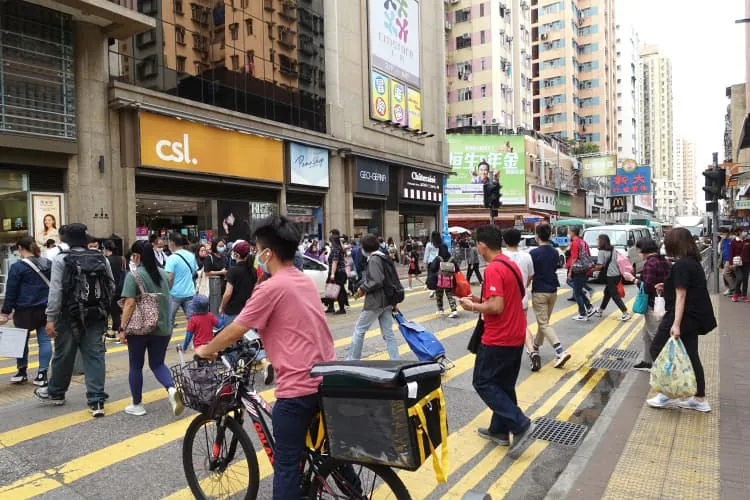
The economic situation in Hong Kong is facing ongoing challenges
Comparing Hong Kong’s Economy with Other Asian Financial Hubs
In the competitive Asian financial landscape, Hong Kong continues to stand strong against regional rivals like Singapore, Tokyo, and Shanghai.
| Metric | Hong Kong | Singapore | Tokyo |
| GDP Growth (2025 est.) | 3.2% | 2.5% | 1.6% |
| Corporate Tax Rate | 16.5% | 17% | 23.2% |
| Ease of Doing Business | High | Very High | Moderate |
| Foreign Investment Appeal | Strong | Strong | Limited by Regulation |
Hong Kong’s strategic position and deep capital markets allow it to remain a preferred destination for multinational corporations seeking a foothold in Asia.
The Role of Mainland China in Hong Kong’s Economic Development
The close integration with mainland China continues to shape economic development in Hong Kong. Initiatives such as the Greater Bay Area, RCEP (Regional Comprehensive Economic Partnership), and cross-border fintech cooperation have strengthened Hong Kong’s strategic importance.
Key Collaboration Areas:
- Financial Connectivity: Along with Stock Connect, Bond Connect, and Wealth Connect programs, facilitate the flow of capital between Hong Kong and mainland markets.
- Technology Exchange: Partnerships between the innovation centers of Hong Kong and Shenzhen lead to research and talent development.
- Trade Expansion: Chinese firms take advantage of Hong Kong to enter world markets.
A close economic alliance of this kind not only gives Hong Kong a local edge, but it also binds Hong Kong's economy with China's big picture.
Government Strategies for Sustainable Economic Growth
The Hong Kong government has implemented several forward-looking policies to maintain competitiveness and boost the Hong Kong economic growth rate:
1. Diversification Beyond Finance
Although financial services are still at the core of the economy, the long-term sustainability of the economy depends on the expansion into technology, creative industries, and renewable energy sectors.
2. Digital Economy Transformation
With AI, 5G, and digital trade investments, Hong Kong is going to be the next economic growth phase, which will be attractive to both startups and investors.
3. Infrastructure and Connectivity
Major infrastructure projects, including cross-border rail links and smart city developments, continue to enhance Hong Kong’s logistical and economic connectivity.
4. Fiscal Prudence
The fiscally disciplined Hong Kong is able to keep its public debt low and foreign reserves stable, thus it is rewarded with the confidence of global investors.
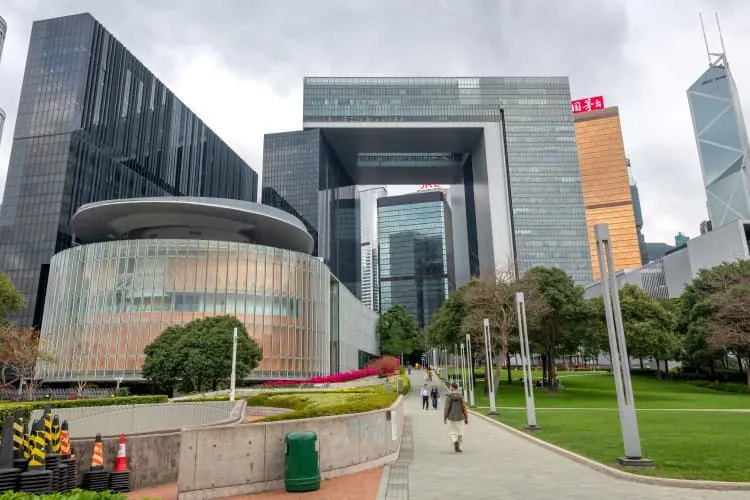
The Hong Kong government has implemented some forward-looking policies
Future Outlook: What’s Next for the Hong Kong Economy?
Hong Kong's economic forecast for 2025 and further years is positive and at the same time reasonable. The expected growth will be stable, innovative, and closely linked with the region.
Predicted Trends:
- Gradual GDP increase of approximately 3–4% yearly
- Development of fintech, green finance, and biotech sectors
- Collaboration with the Greater Bay Area is getting deeper
- Investment in digital infrastructure and eco-friendly industries is going on without interruption
Following this trajectory, Hong Kong will be the city of the future not only in terms of a financial market and a hub of innovation, but also an area of expanded business activities covering Asia and the rest of the world.
Conclusion: A Resilient and Innovative Economic Future
Hong Kong's economic scene may be said to be vibrant despite the worldwide problems. Its success is mainly due to innovation, the government's policy support, and its enduring nature. A city with a well-built financial system, being open to international trade, and having a strong will for environmental protection, Hong Kong is still the leading economy of Asia.
It is imperative for investors, entrepreneurs, and businesses anywhere in the world to know about economic growth in Hong Kong if they want to be the first to snap up the new opportunities in this vibrant city. Hong Kong's mixture of tradition, innovation, and advantageous location is a strong enough reason for it to be not only relevant but also a leader in global commerce in 2025 and years to come.
If you were to make a move in the Hong Kong market, expanding your business there, or just entering the market, it would be of great help if you could work with a reliable corporate service provider. OneIBC Hong Kong is the place where you will find all the solutions you need to run your business successfully in Hong Kong: company incorporation, bank account opening, corporate secretarial, and compliance services.


News
View All
Franchise in Hong Kong: Guide to Lucrative Business Opportunities
Hong Kong is renowned as a global financial hub, a melting pot of cultures, and a dynamic consumer market. With its strategic location, robust legal framework, and thriving entrepreneurial environment, the city has become a hotspot for investors seeking franchise opportunities in Hong Kong.
Dec 06, 2025, 13:43 (UTC+08:00)

Launch Your Startup in Hong Kong: Procedures, Ideas, and Compliance
Establishing a startup in Hong Kong provides the opportunity to launch a business in one of the most dynamic hubs of entrepreneurship in Asia.
Nov 10, 2025, 16:29 (UTC+08:00)