Singapore Budget 2018: Key Highlights
Updated time: Jul 17, 2020, 09:45 (UTC+07:00)
Finance Minister Heng Swee Keat presented the Budget for the year on February 19 2018. The plan highlights the importance of laying the foundation for Singapore’s development and the need to combine all resources to strengthen Singapore.
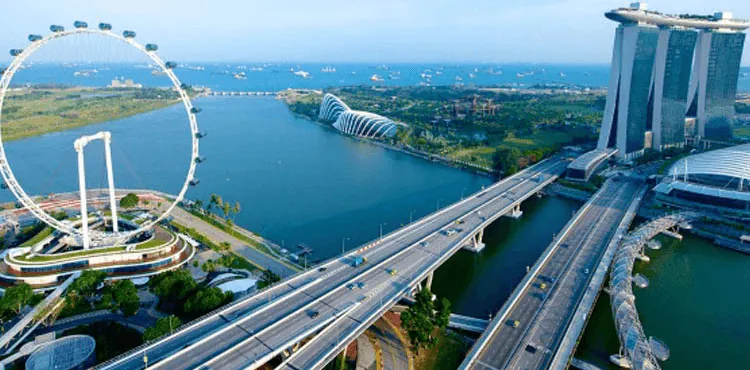
Several tax changes were announced to provide support to firms and promote innovation across for businesses:
- Goods and Services Tax (GST) to increase from 7% to 9% between 2021 and 2025.
- Corporate Income Tax Rebate to increase from 20% to 40% of tax payable, capped at SGD 15,000 for 2018, and at 20% of tax payable, capped at SGD 10,000 for 2019.
- Tax deduction for qualifying expenditure on research and development (R&D) will be enhanced from 150% to 250% for 2019 to 2025.
- Tax deduction for registering and protecting intellectual property (IP) will increase from 100% to 200% for the first SGD 100,000 qualifying IP registration costs incurred for each year from 2019 to 2025.
- Double Tax Deduction for Internationalization Scheme will be enhanced by increasing the cap of automatic tax deduction from SGD 100,000 to SGD 150,000 on expenses incurred on qualifying activities per year from 2019 onwards.
- Start-up Tax Exemption Scheme (SUTE) will be adjusted from 100% to 75% on the first SGD 100,000 of normal chargeable income while 50% exemption applies on the next SGD 100,000. This will take effect on or after 2020.
- Partial Tax Exemption Scheme will be adjusted to 75% exemption on the first SGD 10,000 of normal chargeable income and 50% exemption on the next SGD 190,000. The change will take effect on or after 2020.
- The Business and IPC Partnership Scheme will be extended until 31 December 2021.
- The 250% tax deduction for qualifying donations is extended for another three years until 31 December 2021.
- GST on imported services will be introduced after 1 January 2020 with the implementation of the following regimes.
- B2B imported services will be taxed via a reverse charge mechanism. Only GST-registered businesses that make exempt supplies or do not make any taxable supplies need to apply reverse charge.
- Overseas vendor registration (OVR) regime for Business-to-Consumer (B2C) supplies of imported digital services requires certain suppliers to register for GST with IRAS.
- Further details will be released by March 2018.
Singapore is in a good position and facilitate for all foreigners around the world to capture the opportunities. Budget 2018 will develop a more vibrant and innovative economy, smart and liveable city and continue to plan ahead for a fiscally sustainable and secure future.
Source: Government of Singapore
Read more




Articles
View All
The F&B Industry in Vietnam: A Fast-Growing Market of Opportunities
Dec 06, 2025, 08:26 (UTC+07:00)

Business Tax in Vietnam: Compliance, Corporate Rates, and Investment Incentives
Dec 06, 2025, 08:24 (UTC+07:00)

Small Business in Vietnam: Opportunities, Ideas, and Strategies for 2026
Dec 06, 2025, 08:17 (UTC+07:00)