Switzerland: The most popular types of companies for investors
Updated time: Jul 26, 2021, 17:15 (UTC+07:00)
Switzerland is a civilized, modern and highly developed country, which attracts many investors around the world.
One IBC® - With many years of experience in corporate service consultancy, we give you a closer look about the 3 most popular types of companies in Switzerland for setting up offshore companies.

Switzerland is a beautiful country located in the heart of Europe
Swiss Limited Liability Company (GmbH/Sàrl)
Swiss Limited Liability Company (LLC) is one of the most common types of companies for foreign investors when setting up a company in Switzerland.
The abbreviation “GmbH” (Gesellschaft mit beschränkter Haftung) means “Limited Company” in German. Moreover, Swiss LLCs are also known as “Société à Responsabilité Limitée” (Sàrl) in French.
Here are some requirements for setting up a Swiss LLC (GmbH/Sàrl):
- The minimum capital required to form a Swiss LLC is 20,000 CHF and must be paid up at the time of incorporation.
- At least one Director/Shareholder, who is a Swiss resident.
- Par value of shares: minimum of 100 CHF.
- Companies having more than 10 employees are required to carry out annual audits.
- Must have an office in Switzerland and a local registered agent to accept letters, legal documents, etc.
- Swiss LLCs are required to hold shareholder meetings at least once a year.
- Shareholders’ information and amount of their shares must be disclosed.
When establishing a Swiss LLC (GmbH/Sàrl), international investors have many advantages, e.g. 100% foreign-owned company, one shareholder can have full control, shareholders' liability are limited by their share contributions.
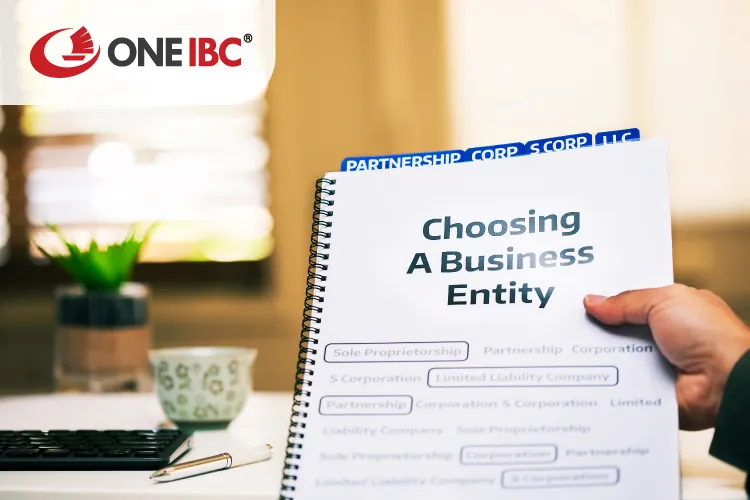
One IBC® has many years of experience in business consultancy in Switzerland
Swiss corporation/Joint-stock company (AG/SA)
Besides Swiss LLC (GmbH/Sàrl), Swiss corporation (AG/SA) is also a common business entity in Switzerland. A Swiss corporation is called “Aktiengesellschaft” (abbreviated AG) in German, or Société Anonyme (abbreviated SA) in French.
Below are some features of Swiss corporation:
- A minimum share capital of 100,000 CHF is required for Swiss corporation registration. The amount to be paid is 20% of the nominal capital or 50,000 CHF, whichever amount is greater.
- At least one Director/Shareholder, who is a Swiss resident.
- Par value of shares: minimum of 1 Swiss cent.
- A Swiss corporation normally ought to file financial statements and audits. However, small companies with fewer than 10 employees are not required to undergo audits.
- Must have an office in Switzerland and a local registered agent to accept letters, legal documents, etc.
For a Swiss corporation, shareholders’ information and the number of their shares do not need to be publicly disclosed, thus investors' identities are more secure. Shares in a Swiss corporation can be freely sold or transferred to another person.

One IBC® is the trusted partner on your way of doing business
Swiss sole proprietorship
Starting a Swiss sole proprietorship is probably the fastest and least expensive way of setting up a business in this country. There is no minimum capital, no signing of the articles and no need for a notary.
Following are some features of a Swiss sole proprietorship:
- It is not required to register a Swiss sole proprietorship at the Swiss trade registry unless the company’s annual turnover is more than 100,000 CHF.
- The company name must include the last name of the business owner.
- A non-Swiss resident registering a sole proprietorship in Switzerland must request a work permit (G permit). The filing must include a business plan and the description of the infrastructure to be used.
- If a sole proprietorship has a turnover of less than 100,000 CHF, declaring VAT is not required.
Above is basic information about 3 most common forms of business in Switzerland. Normally, it will take One IBC® at least 12 days to set up a Swiss business with reasonable cost. Please contact One IBC® at Hotline 18006758 or email [email protected] for more advice on setting up an offshore company in Switzerland.




Articles
View All
The F&B Industry in Vietnam: A Fast-Growing Market of Opportunities
Dec 06, 2025, 08:26 (UTC+07:00)

Business Tax in Vietnam: Compliance, Corporate Rates, and Investment Incentives
Dec 06, 2025, 08:24 (UTC+07:00)

Small Business in Vietnam: Opportunities, Ideas, and Strategies for 2026
Dec 06, 2025, 08:17 (UTC+07:00)